Local SEO
Google Business Profile in the Mar Menor: the guide that actually works
A practical guide to get your business in San Javier, San Pedro or Los Alcazares on the Google map and inside AI answers. No hype, real steps.

Try this right now. Grab your phone and search Google for “plumber San Javier” or “restaurant Los Alcazares”. Before any website appears, Google shows you a map with three featured businesses. Three. Out of every business in your town, only three get the phone call.
That box is called the local pack, and it is, without exaggeration, the most valuable shop window a local business can have today. It is free, it works 24 hours a day and most of your competitors have it abandoned. This guide walks you through how to get in there, what makes Google pick some businesses over others and the mistakes we see over and over when we audit local profiles.
A quick note before we start: Google My Business is officially called Google Business Profile now, though everyone still uses the old name. We will use both interchangeably.
Why this matters more in the Mar Menor than almost anywhere else
In a big city, people already know the businesses in their neighbourhood. Here something different happens: the Mar Menor population multiplies every summer. Thousands of people land in Santiago de la Ribera, Lo Pagan or Los Urrutias without knowing a single thing about the town. What do they do when they need a pharmacy on duty, a place to have dinner or someone to fix the air conditioning in the apartment? They pull out their phone and search “near me”.
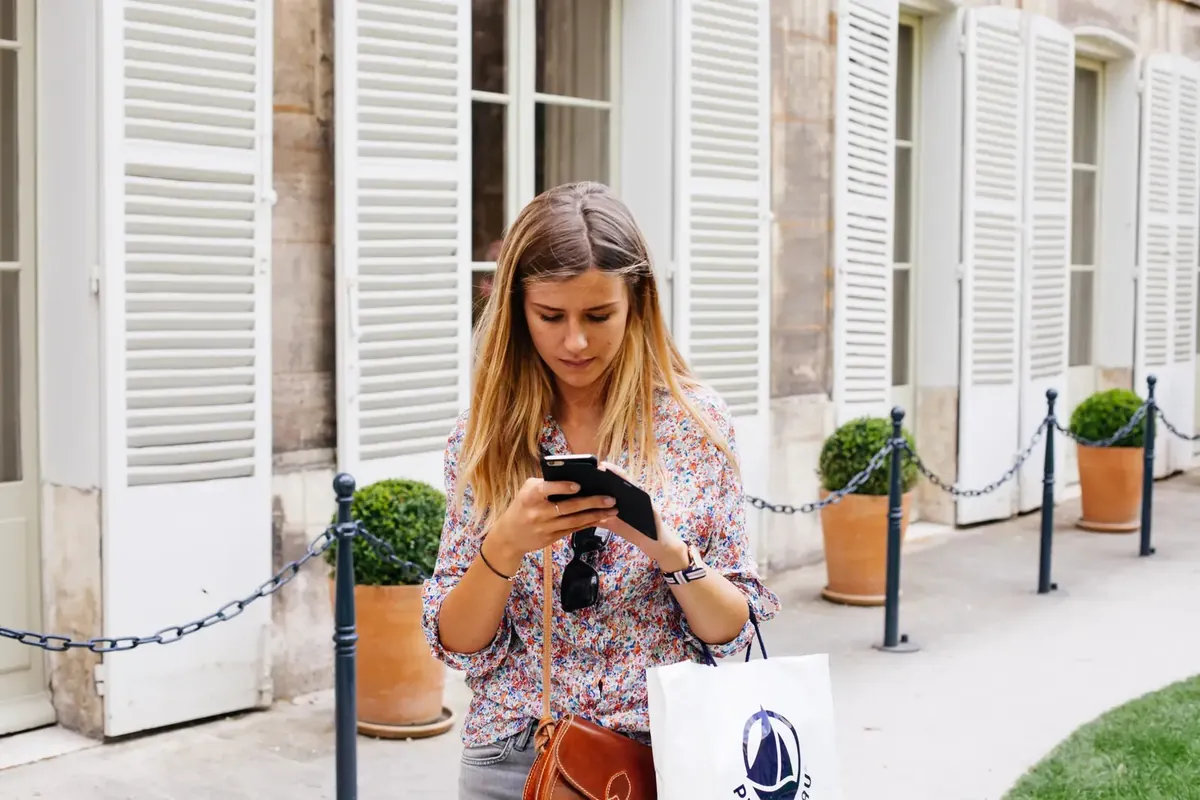
For that person you do not exist unless you are on the map. It does not matter that you have been on the main street for twenty years: the tourist does not walk reading shop signs, they walk looking at Google Maps. And the new resident, the one who just moved in, does exactly the same.
There is a second and more recent reason almost nobody talks about: artificial intelligence. More and more people ask ChatGPT or Gemini directly for things like “recommend me a physio in San Pedro del Pinatar”. And where do these tools pull the answer from? Largely from the public information available about your business: your Google profile, your reviews, your website. At Inteclia we check this with every business we analyse, and the result is usually uncomfortable: the AI recommends the competitor with the polished profile and never mentions the one who left it empty. An optimised profile no longer just ranks you on Google. It ranks you inside the answers AI gives about your town.
The outsider test: how we audit a profile in 5 minutes
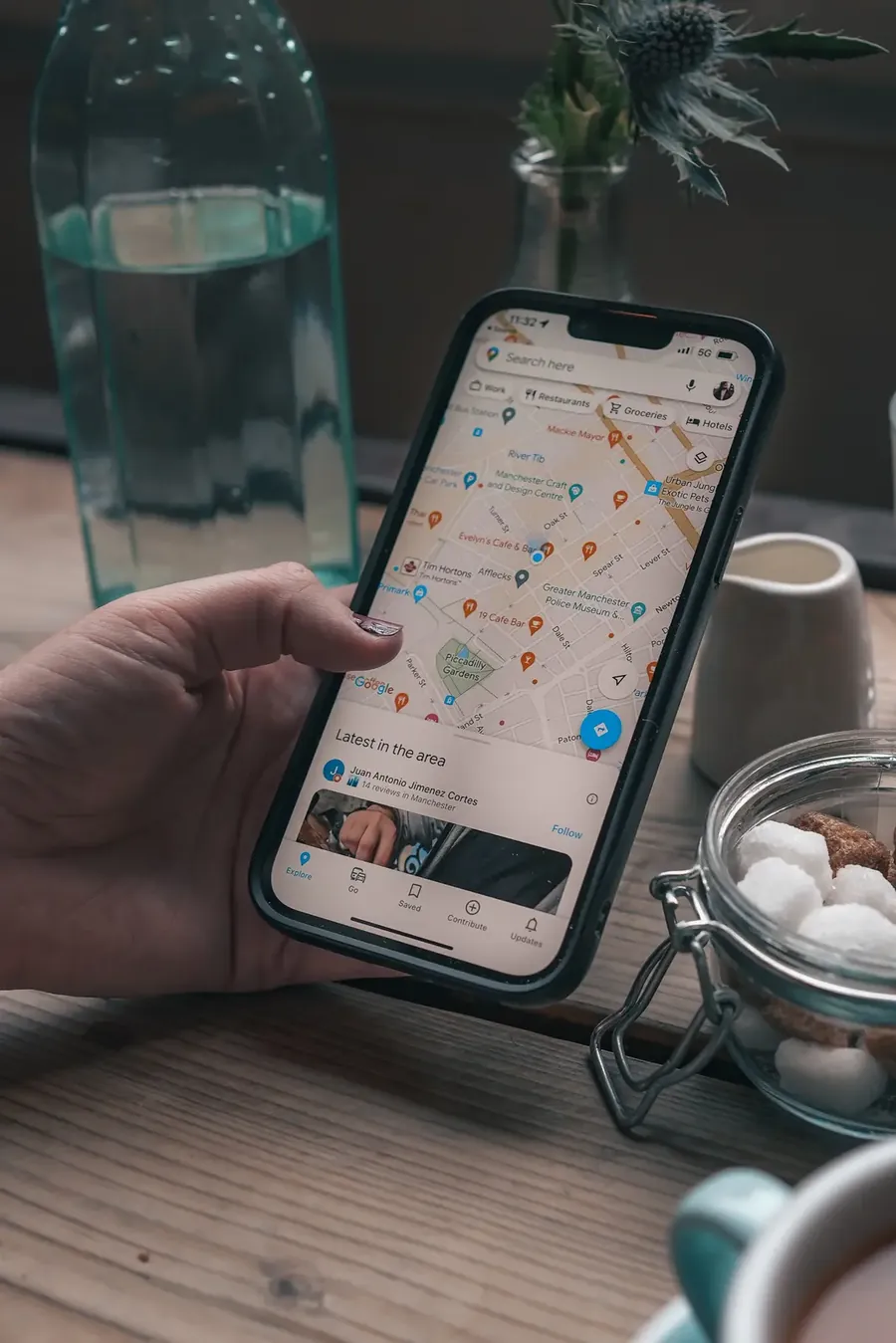
Before touching anything, measure where you stand. At Inteclia we use a method we call the outsider test: put yourself in the shoes of someone who has never heard of you.
- Open an incognito window in your browser (so Google does not show you results biased by your history).
- Search what a customer would search, not your brand name. Nobody who does not know you searches “Garcia Dental Clinic”. They search “dentist San Javier” or “emergency dentist near me”.
- Look at the local pack. Do you show up? In what position? Who ranks above you?
- Open your profile and look at it as a stranger. Do the photos make you want to walk in? Is the schedule correct? Is the last reviewed answered from two years ago?
- Finish with the AI test: ask ChatGPT for your type of business in your town and see if you appear.
If the result hurt a little, good. Now you know your starting point. Let us fix it.
The foundations: claim, verify and fill in everything

The first thing is taking control of your profile. Many businesses in the area have a profile that Google created automatically (or an old employee, or a relative back in 2017) and nobody manages it. Go to google.com/business, search for your business and claim it. Verification is usually done by video or by a postcard with a code. If you get stuck on any step, the official Google Business help is better documented than it seems and covers most doubts.
Once inside, the rule is simple: do not leave a single field empty. Google rewards complete profiles because it trusts them more. Pay special attention to:
The primary category. It is the single most important decision on the whole profile and where we see the most mistakes. Be specific: “Murcian cuisine restaurant” ranks better for what you actually want than a generic “Restaurant”. A physiotherapist who also runs pilates classes should have “Physiotherapist” as primary and “Pilates studio” as secondary, not the other way around. Think about what your most profitable customer searches and pick the category that answers that search.
Name, address and phone identical everywhere. Google cross-references your profile with your website, directories and every mention of your business online. If your profile says “Av. Sandoval 12” and your website says “Avenida de Sandoval, nº 12, Santiago de la Ribera”, for you it is the same, but for an algorithm those are inconsistent signals. Pick one way to write it and use it everywhere.
The description. You get 750 characters. Do not waste them on “a leading company committed to service”. Write the way you talk and slip in naturally what you do and where: “Mechanical workshop in San Pedro del Pinatar specialised in... We work for customers all around the Mar Menor: Lo Pagan, San Javier, Santiago de la Ribera...”. Town names are not decoration, they are the exact words people type into the search box.
Opening hours, always up to date. And here comes a piece of advice specific to this area that almost nobody applies: use special hours. If your business changes hours in summer, opens on August public holidays or closes for January vacation, flag it on the profile. Nothing generates more one-star reviews than a tourist standing in front of a closed shutter because Google said “open”. Set a reminder twice a year, in June and September, to review hours. Two minutes that save you a lot of trouble.
Photos: the factor that decides the visit
Google's own stats have been saying the same thing for years: profiles with good, recent photos get many more direction requests and calls. And yet, the photographic state of local profiles around here is grim: photos from the opening night eight years ago, dark shots of an empty shop or, worse, only the photos customers uploaded (with a half-eaten fried dish in the foreground).
You do not need a professional photographer, you need judgement:
- Storefront in daylight, well lit, so people can recognise it while walking. It is the single most useful photo.
- The interior with life. A room with people (even if it is your own team) feels twice as inviting as an empty one.
- Your product or your work. The signature dish just plated, the before and after of a renovation, the treatment room spotless.
- People. A photo of the team smiling converts more than any logo. In a small town, people buy from people.
- Upload new photos every month. A profile with recent photos tells Google the business is alive. Three or four photos a month is enough and it takes five minutes on your phone.
And forget the trick of renaming files with keywords or geolocating photos with weird apps: those are myths going around the internet and they do not move the ranking. Spend the time on taking better photos, not on disguising them.
Reviews: the local ranking engine (and the trust engine)
If photos decide the visit, reviews decide two things: that Google shows you and that the customer picks you. They are probably the heaviest local ranking factor and the one that scares owners the most. The system to do it well fits in three rules:
Ask at the peak satisfaction moment. When the customer tells you “this turned out great”, that is the window. “I am really glad, would you mind leaving me that in a Google review? It helps a small business like ours a lot” works because it is honest and because local people help local businesses. The practical trick: have your direct review link ready (Google gives it to you in the dashboard) and send it by WhatsApp right there. Every step you save the customer multiplies the reviews you get.
Reply to absolutely all of them. Good and bad. And when you reply, write naturally but with intent: “Thanks Mari Carmen, it was a pleasure preparing the caldero for the whole family. We hope to see you again this summer in Santiago de la Ribera!” is a reply that thanks, mentions your product and location and sounds human. Google reads your replies and they are content that ranks.
Bad reviews get answered cold and with class. Never argue in public. Thank, regret, offer a solution in private and sign off. The goal of that reply is not to convince the complainer: it is that the two hundred people who read it afterwards think “these people really know how to reply”. A bad review well handled builds more trust than ten five-star reviews left unanswered.
And a hard line: never buy reviews or trade them with friends who are not real customers. Google detects them better every day, and the penalty (from wiping the reviews to suspending the profile) costs far more than what you gained.
Posts, questions and the details that set you apart
There are three profile features that 95% of local businesses do not use, and precisely for that reason they work:
Posts. The profile lets you publish news, offers and events, like a mini social network inside Google. The daily menu, an appointment available this week, a new collection, special hours for the town fair. One post a week keeps the profile alive and takes up more screen space when someone searches for you.
Questions and answers. Anyone can ask on your profile and, watch out, anyone can answer. If you do not monitor it, the answer to “do you have a terrace?” will be given by a stranger. The smart move: get ahead and publish the frequently asked questions with your own answers (is there parking nearby? do you take card? do you give free quotes?).
Attributes and services. Terrace, wheelchair access, wifi, pet friendly, free quotes. Every attribute ticked is a filter you can appear in. In a beach area, “pet friendly” or “terrace” are real searches every weekend.
The five mistakes we see the most in local profiles
After auditing profiles from businesses in San Javier, San Pedro, Los Alcazares and the surroundings, the same errors repeat with striking consistency:
- Unclaimed profile. The business exists on the map but nobody controls it. No hours, no photos, no replies.
- Hours not updated after summer. The classic October issue: the profile still shows August hours.
- Generic or wrong category. “Shop” instead of “Hardware store”. “Company” instead of “Renovation company”.
- Zero replies to reviews. Twenty reviews, some with direct questions, and total silence since 2021.
- The linked website is broken or does not load on mobile. Google measures what happens when someone taps your link. If the site is slow or looks broken, that signal costs you (and the customer walks away). We talk about that in depth in our article on WordPress and custom websites.
The striking part is that none of these mistakes need money to fix. They need method and consistency, which is exactly what is missing when you run the business and a thousand other things at the same time.
How long until results show (the honest answer)

This is where many agencies sell smoke, so let us go with the truth: a well optimised profile starts showing movement in 4 to 8 weeks, and serious results (climbing into the local pack for your main searches) usually land between 2 and 6 months, depending on how much competition your sector has in your town. A locksmith in Los Alcazares with three competitors can rise fast; a beachfront restaurant in Lo Pagan is facing a longer battle.
The good news: this is cumulative. Every review, every photo and every post adds to the previous ones. A business that works its profile for twelve months builds a lead over someone starting from zero that takes years to close. That is why the best time to start was a year ago and the second best is today.
Do it yourself or let us take it off your plate
Everything you have read you can do yourself, and in fact this guide is written for that. With one hour a week and consistency, your profile can be among the best in your town in a few months.
If you prefer us to handle it, at Inteclia the full optimisation of your Google Business Profile is included in our digital presence pack for local businesses: we leave it spotless, connect it with a fast website and prepare your business so AI models also find you. And if you are already on our monthly maintenance plan, managing the profile (posts, photos, review replies) is part of what we do every month without you having to think about it.
Want to know where your profile stands right now? Write to us and we will prepare a free diagnosis of your presence on Google and inside AI answers, no strings attached. We are locals, we grab a coffee and walk you through it with your business on screen.
Frequently asked questions
How much does it cost to appear on Google Maps?
Nothing. Google Business Profile is free. What costs you time is optimising it and keeping it alive, and that is where you can do it yourself or delegate it.
Can I have a profile if I work without a shop, like a plumber or an electrician?
Yes. Google allows service-area business profiles with no visible address: you define your coverage area (for example, the whole Mar Menor shore) and show up in searches for that area without exposing your home.
Why does my competitor rank first when I have more reviews?
Local ranking combines three factors: relevance (how complete and well categorised the profile is), distance (where the searcher is) and prominence (reviews, mentions, website). You can win on reviews and lose on the other two. That is why the profile is worked as a whole, not one piece in isolation.
What do I do if someone leaves a fake review?
Report it from the profile dashboard with the reason and, while Google reviews it, reply calmly making clear the person is not on your customer list. A composed reply protects your image even if the review takes time to come down.
Do profile posts actually work or are they just a trend?
They serve two measurable purposes: they keep the profile active in Google's eyes and take up more visual space when someone sees your business. Do not expect miracles from one post; expect results from publishing every week for months.
Does this also make ChatGPT recommend my business?
Directly. AI models feed on public information about your business, and your Google profile with its reviews is one of the main sources. A complete profile, with real and well-answered reviews, multiplies the chances of appearing when someone asks an AI about your sector in your area.